Trastuzumab emtansine
Kadcyla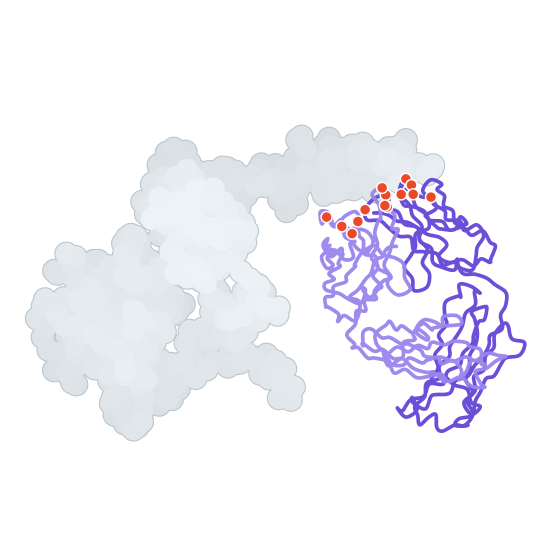
14 antibody residues touch HER2, each within 4 Å
Shown: trastuzumab's Fab, the antigen-binding arm of the antibody this medicine is built on. The medicine is the whole antibody with emtansine (DM1) drug molecules attached; neither is shown.
A HER2-targeting antibody with a cell-killing chemotherapy drug chemically attached, delivering that chemotherapy directly inside HER2-positive cancer cells.
How it works
This drug is really two medicines joined together. The first part is an antibody that finds and locks onto a protein called HER2, present in unusually high amounts on certain breast cancer cells. Once attached, the cancer cell pulls the whole drug inside itself, where it releases a potent cell-killing chemotherapy agent that jams the cell's internal scaffolding and causes it to die. Because the chemotherapy is only released after the antibody has locked onto HER2, the drug spares most healthy cells.
What it’s used for
Used to treat HER2-positive breast cancer that has spread, in patients who already tried standard trastuzumab and taxane chemotherapy. Also given after surgery to patients with early-stage HER2-positive breast cancer if cancer cells remain following pre-surgery chemotherapy.
- Mechanism
- HER2-targeted antibody-drug conjugate
- Drug class
- Antibody-drug conjugate
- Therapeutic area
- Oncology
- Structure shown
- X-ray, 2003