Tamoxifen
Nolvadex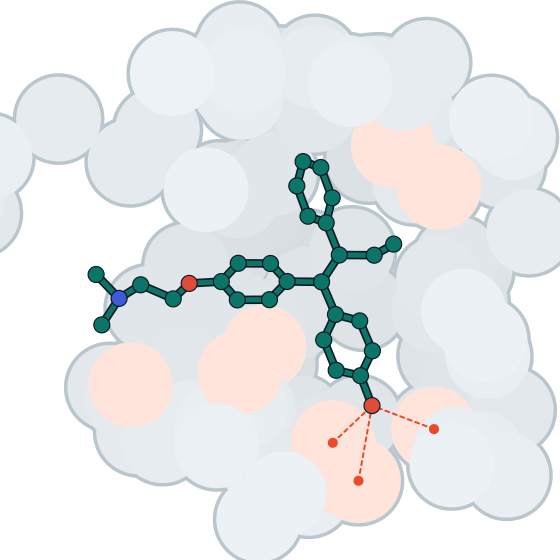
3 polar contacts with 2 residues, each within 3.5 Å
Shown: 4-hydroxytamoxifen, the active form the body makes from tamoxifen.
Blocks estrogen from binding to its receptor in breast tissue, cutting off a signal that certain breast cancers need to grow.
How it works
Tamoxifen works by attaching to estrogen receptors on cells, essentially occupying the docking station that estrogen would normally use. In breast tissue, this blocks estrogen from telling hormone-sensitive cancer cells to grow and divide. Interestingly, the drug doesn't block estrogen everywhere in the body — in the uterus and bones it can actually act a bit like estrogen, which is why it carries different effects in those tissues. The drug needs to be taken consistently over an extended period, often years, to provide its full benefit.
What it’s used for
Used to treat breast cancer that has spread, in both women and men, and as follow-up therapy after breast cancer surgery to help prevent the cancer from coming back. Also prescribed to lower the chance of invasive breast cancer developing in women who've had a related pre-cancerous condition treated, and as a preventive option for women at notably elevated risk.
- Mechanism
- Selective estrogen receptor modulator (SERM)
- Drug class
- Small molecule
- Therapeutic area
- Oncology
- Structure shown
- X-ray, 1999