Erlotinib
Tarceva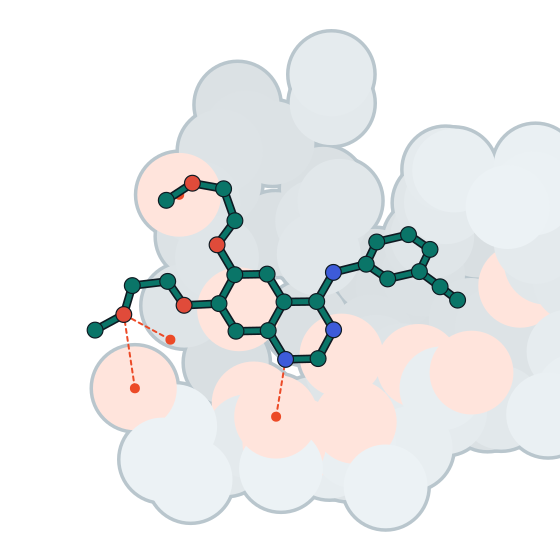
4 polar contacts with 4 residues, each within 3.5 Å
Blocks a growth-signal switch on cancer cells that's stuck in the on position, cutting off the signal that tells the tumor to keep growing.
How it works
Erlotinib is a pill that gets inside cancer cells and jams a specific on switch, called EGFR, that many lung and pancreatic tumors rely on to keep dividing. Normally, EGFR sits on the cell surface and passes along growth signals from outside the cell to the machinery inside; erlotinib plugs into the part of EGFR that would normally pass that signal on, so the message never gets through. It works especially well in tumors whose EGFR has specific mutations because erlotinib grips those altered versions more tightly than the normal receptor. With the growth signal cut off, the cancer cells lose the constant keep-growing instruction they were depending on.
What it’s used for
Used to treat advanced or metastatic non-small cell lung cancer in patients whose tumor DNA testing shows specific EGFR mutations — either as a first treatment, as ongoing maintenance therapy, or after chemotherapy has stopped working. Also used together with the chemotherapy drug gemcitabine as an initial treatment for pancreatic cancer that is advanced, inoperable, or has spread.
- Mechanism
- EGFR tyrosine kinase inhibitor
- Drug class
- Small molecule
- Therapeutic area
- Oncology
- Structure shown
- X-ray, 2002