Imatinib
Gleevec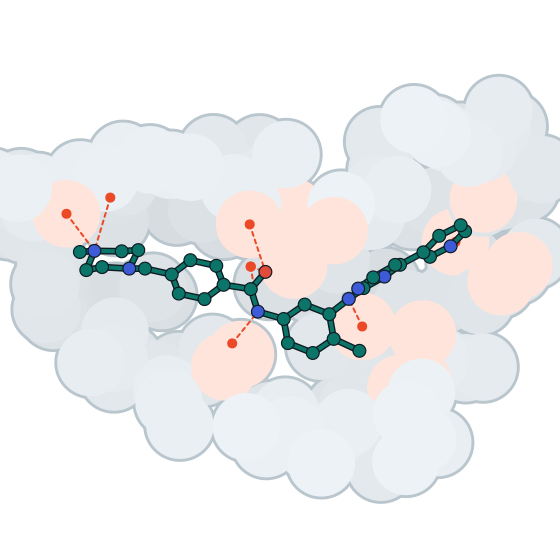
8 polar contacts with 6 residues, each within 3.5 Å
Blocks the activity of an abnormal enzyme that drives growth in certain leukemia cells and several other kinase-driven cancers, stopping them from multiplying.
How it works
Imatinib is a pill that works by physically plugging into a pocket on a small group of related growth-control proteins — most notably one called BCR-ABL, an abnormal, always-on protein found in certain leukemia cells, plus two others called PDGFR and KIT. Once imatinib fills that pocket, it blocks the protein's normal fuel source from getting in, so the protein can no longer send out its 'keep growing and dividing' signal. In BCR-ABL-driven leukemia cells, cutting off that signal stops the cells from multiplying and can cause them to die off. In tumors driven by KIT or PDGFR instead — such as gastrointestinal stromal tumors (GIST) — the same blocking action removes the growth signal keeping those tumor cells alive, which is why one drug works across several different cancer types.
What it’s used for
Imatinib is approved to treat a range of cancers that share one thing in common: they're fueled by one of the specific growth-signaling proteins this drug blocks. That includes several forms of chronic myeloid leukemia and acute lymphoblastic leukemia, some rarer blood and bone-marrow disorders (such as certain myelodysplastic diseases, systemic mastocytosis, and hypereosinophilic syndrome), a skin cancer called dermatofibrosarcoma protuberans, and gastrointestinal stromal tumors (GIST) — a type of tumor in the stomach or intestines — where it's used both to shrink existing tumors and to help prevent them from returning after surgery.
- Mechanism
- BCR-ABL tyrosine kinase inhibitor
- Drug class
- Small molecule
- Therapeutic area
- Oncology
- Structure shown
- X-ray, 2007
The drug that launched targeted cancer therapy
Before imatinib, cancer drugs mostly worked by poisoning any fast-growing cell, tumor and healthy tissue alike. Imatinib was different: researchers had identified the exact broken protein driving chronic myeloid leukemia, a fusion of two genes called BCR-ABL, and imatinib was built specifically to jam it. The results were dramatic — a disease that used to kill most patients within a few years became one people could live with for decades. Its success proved that hunting down a cancer's specific molecular cause, rather than just attacking anything that divides quickly, could actually work — an approach the whole field now calls targeted therapy.
Pivotal trial
Two companion studies establishing safety, dosing, and hematologic/cytogenetic response rates in CML patients — conducted 1998-2000, before clinical trial registries existed, so no NCT number applies.