Palbociclib
Ibrance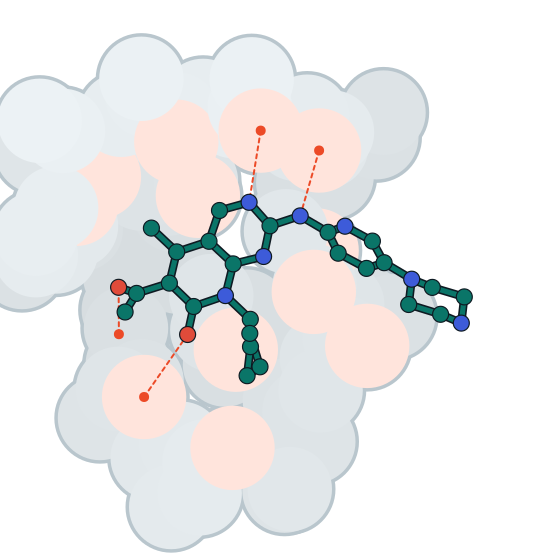
4 polar contacts with 2 residues, each within 3.5 Å
Slows the growth of certain breast cancer cells by blocking two proteins (CDK4 and CDK6) that cells need to divide and multiply.
How it works
Cancer cells rely on two switches, called CDK4 and CDK6, to move forward through the cell division cycle and keep multiplying. Palbociclib blocks these switches, so hormone receptor-positive breast cancer cells get stuck and stop dividing instead of growing into more tumor cells. It works especially well when paired with hormone-blocking therapies. Importantly, this effect is temporary and targeted: normal bone marrow cells affected by the drug recover once treatment is paused, which is why the drug is taken on a cyclical dosing schedule.
What it’s used for
Approved for adults with a common type of advanced or metastatic breast cancer, used alongside hormone therapy, either as a first treatment or after the cancer has progressed on earlier hormone-based treatment. Also approved for a hormone-resistant subtype driven by a specific gene mutation, and as ongoing maintenance treatment for a HER2-positive subtype alongside other targeted therapies.
- Mechanism
- CDK4/6 inhibitor
- Drug class
- Small molecule
- Therapeutic area
- Oncology
- Structure shown
- X-ray, 2016