Oseltamivir
Tamiflu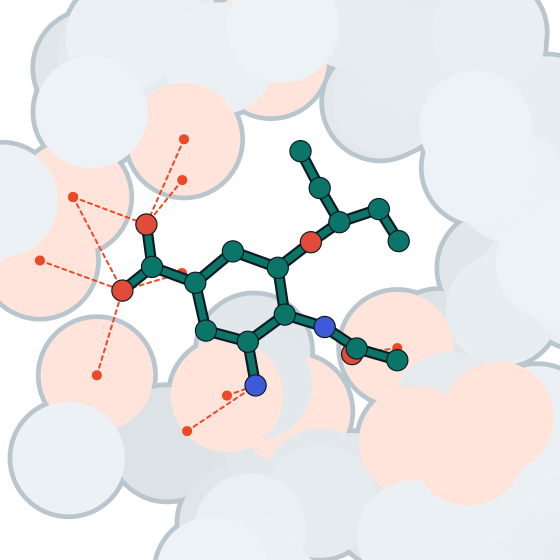
10 polar contacts with 7 residues, each within 3.5 Å
Shown: oseltamivir carboxylate, the active form the body makes from oseltamivir.
Stops the flu virus from breaking free of infected cells, slowing its spread through the body.
How it works
When flu virus infects a cell, it makes copies of itself, but those copies stay stuck to the cell's surface unless a viral enzyme called neuraminidase cuts them loose. Oseltamivir turns into an active form in the body that jams this enzyme, so newly made virus particles can't escape and infect neighboring cells. This doesn't kill virus already inside cells, it slows the infection's spread throughout the airways, which is why it works best when taken early, ideally within two days of symptoms starting.
What it’s used for
Approved to treat the flu in people as young as 2 weeks old, but only if it's started within 2 days of symptoms appearing. Also approved to help prevent the flu in people age 1 and older who've been exposed to someone sick with it, or during a flu outbreak in their community.
- Mechanism
- Neuraminidase inhibitor
- Drug class
- Small molecule
- Therapeutic area
- Antiviral
- Structure shown
- X-ray, 2011