Acyclovir
Zovirax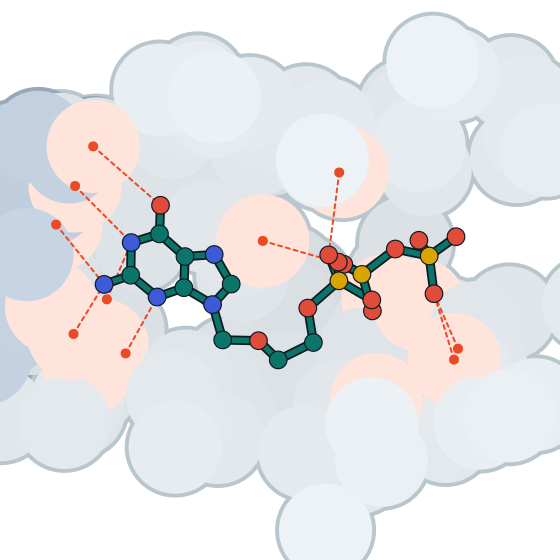
10 polar contacts with 4 residues and 2 DNA nucleotides, each within 3.5 Å
Shown: acyclovir triphosphate, the active form the body makes from acyclovir.
The DNA in the structure is drawn in a darker blue-grey: the drug sits against it as well as against the protein.
Tricks the herpes virus into using a faulty DNA building block, jamming its copying machinery so it can't make more of itself.
How it works
Acyclovir is a lab-made stand-in for one of the building blocks the herpes virus needs to copy its own DNA. An enzyme made only by the herpes virus is what switches the drug on — healthy human cells mostly ignore it, which is why the drug mainly affects infected cells. Once activated, it gets stitched into the virus's new DNA strand and brings construction to a halt, so the virus can't finish copying itself. Because only infected cells turn the drug on in the first place, it can knock out the virus while leaving most normal cells undisturbed.
What it’s used for
Used to treat shingles, genital herpes outbreaks — both a first episode and repeat flare-ups — and chickenpox. A hospital IV version treats more serious cases: herpes infection of the brain, herpes in newborns, and shingles or herpes in people with weakened immune systems. A topical cream/ointment version treats cold sores on the lips and certain herpes skin infections.
- Mechanism
- Viral DNA polymerase inhibitor (guanosine analog)
- Drug class
- Small molecule
- Therapeutic area
- Antiviral
- Structure shown
- Cryo-EM, 2025