Cetuximab
Erbitux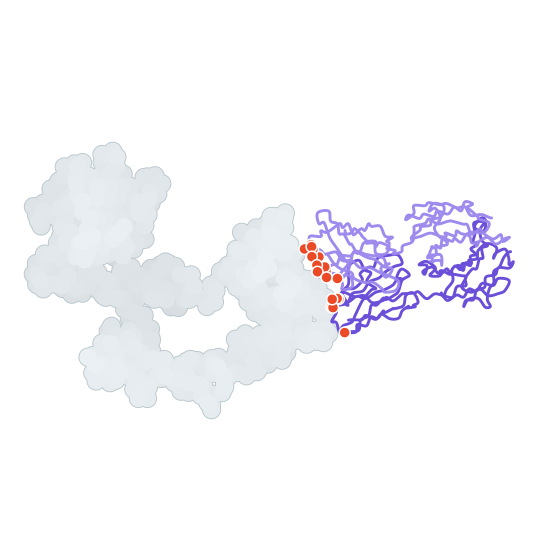
18 antibody residues touch EGFR, each within 4 Å
Shown: the antibody's Fab, its antigen-binding arm, not the whole antibody.
A lab-made antibody that clamps onto EGFR, a receptor on the surface of certain cancer cells, blocking the signal that tells those cells to keep growing and divide out of control.
How it works
Many tumors have extra copies of a growth switch called EGFR on their surface, which cancer cells use to keep dividing. Cetuximab is an antibody engineered to stick tightly to that switch before the body's own growth signals can reach it. With the switch jammed, the cancer cells get fewer signals to multiply, and some begin to self-destruct. Doctors often give it alongside radiation or chemo drugs to attack the tumor from multiple angles.
What it’s used for
Used to treat cancers of the head and neck, either alongside radiation for advanced local disease or with chemotherapy for cancer that has spread. Also used for a type of advanced colon or rectal cancer, but only when lab testing shows the tumor's genes are normal, since the drug doesn't work if those genes are mutated.
- Mechanism
- EGFR antagonist (mAb)
- Drug class
- Monoclonal antibody
- Therapeutic area
- Oncology
- Structure shown
- X-ray, 2005