Golimumab
Simponi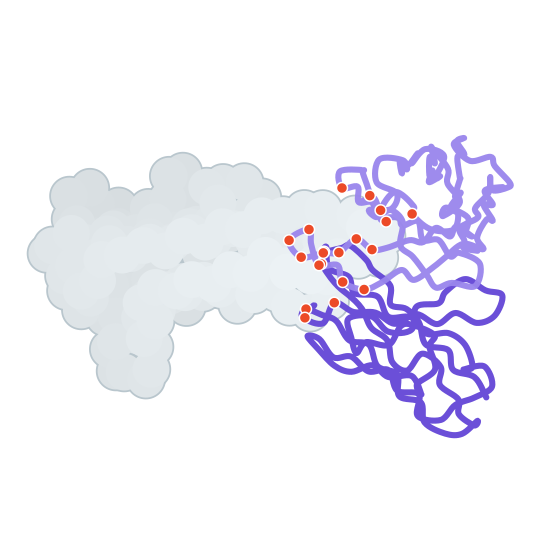
20 antibody residues touch TNF-α, each within 4 Å
Shown: the antibody's Fv, the tip of its antigen-binding arm, not the whole antibody.
A lab-made antibody that neutralizes TNF-alpha, an inflammation-driving protein, to calm autoimmune conditions.
How it works
TNF-alpha is a signaling protein your immune system uses to trigger inflammation, useful for fighting infection but overactive and damaging in autoimmune disease. Golimumab is an antibody engineered to grab onto TNF-alpha before it can dock onto immune cells and switch on the inflammation response. By intercepting the signal, it calms down the swelling, pain, and tissue damage that TNF-alpha would otherwise cause.
What it’s used for
Prescribed for rheumatoid arthritis, psoriatic arthritis, ankylosing spondylitis, and ulcerative colitis, including in some children with the bowel condition.
- Mechanism
- TNF-alpha inhibitor (mAb)
- Drug class
- Monoclonal antibody
- Therapeutic area
- Immunology
- Structure shown
- X-ray, 2018