Infliximab
Remicade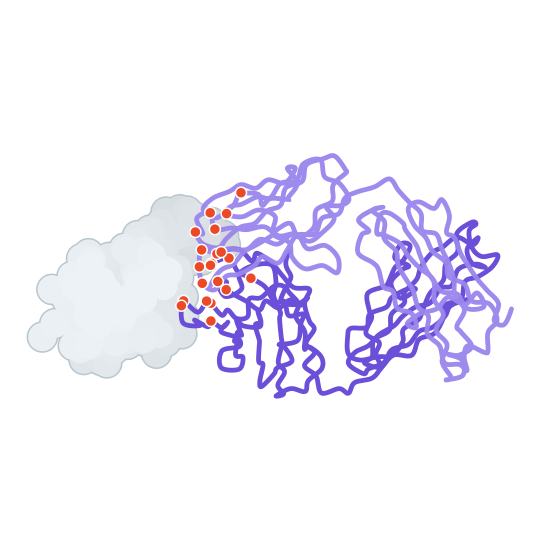
21 antibody residues touch TNF-α, each within 4 Å
Shown: the antibody's Fab, its antigen-binding arm, not the whole antibody.
A lab-made antibody that latches onto and blocks TNF-alpha, a protein the immune system overproduces during inflammation, calming down autoimmune and inflammatory diseases.
How it works
Your immune system uses a protein called TNF-alpha to trigger inflammation, but in autoimmune diseases it produces too much, attacking healthy tissue. Infliximab is an engineered antibody, given through an IV infusion, that grabs onto TNF-alpha and stops it from doing its damage. This helps calm swelling, pain, and tissue injury in conditions affecting the gut, joints, and skin.
What it’s used for
Used to treat inflammatory bowel diseases in both adults and children 6 and up, rheumatoid arthritis, ankylosing spondylitis, psoriatic arthritis, and severe plaque psoriasis.
- Mechanism
- TNF-alpha inhibitor (mAb)
- Drug class
- Monoclonal antibody
- Therapeutic area
- Immunology
- Structure shown
- X-ray, 2013