Certolizumab pegol
Cimzia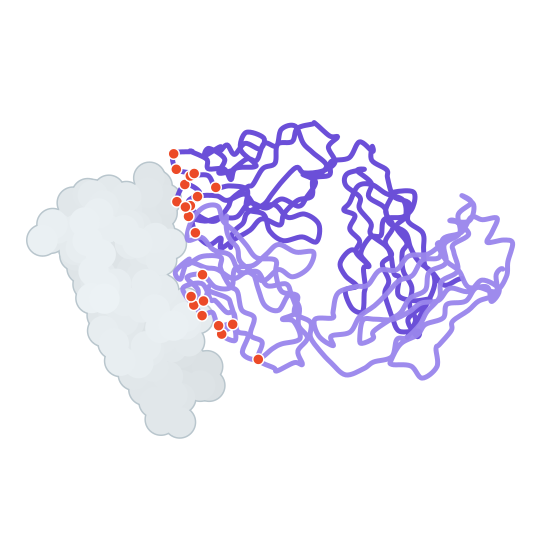
21 antibody residues touch TNF-α, each within 4 Å
Certolizumab pegol is itself an antigen-binding arm (a Fab′), joined to a chain of polyethylene glycol that keeps it in the body longer; the PEG is not shown.
A lab-made antibody fragment, chemically stabilized with a polymer coating, that grabs onto TNF-alpha — a protein that fuels inflammation — and stops it from triggering the immune system.
How it works
This drug is a small, custom-built piece of an antibody — just the hand that grabs its target — rather than a complete antibody. That piece locks onto TNF-alpha and keeps it from switching on inflammation. Normally the missing tail portion of a full antibody can trigger extra immune reactions, but this fragment doesn't have that tail, so it works more selectively. A protective coating is attached to the fragment so it stays in the body longer.
What it’s used for
Approved to treat several inflammatory conditions: rheumatoid arthritis and juvenile idiopathic arthritis, psoriatic arthritis and plaque psoriasis, ankylosing spondylitis and related spinal inflammation, and Crohn's disease.
- Mechanism
- TNF-alpha inhibitor (PEGylated Fab fragment)
- Drug class
- Fab fragment
- Therapeutic area
- Immunology
- Structure shown
- X-ray, 2017