Belimumab
Benlysta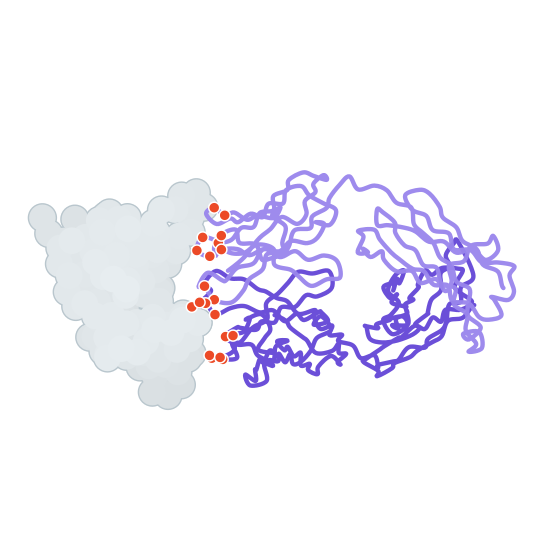
20 antibody residues touch BAFF, each within 4 Å
Shown: the antibody's Fab, its antigen-binding arm, not the whole antibody.
A lab-made antibody that soaks up BLyS, a survival signal B cells need, so fewer of the misguided immune cells that attack the body's own tissues survive.
How it works
B cells are immune cells that, in lupus, mistakenly attack the body's own tissues instead of just germs. A protein called BLyS acts like a survival ration that keeps these B cells alive and helps them mature into antibody-making cells. Belimumab works upstream, mopping up the BLyS food supply before it reaches them. Deprived of that signal, more of the harmful, self-attacking B cells die off naturally.
What it’s used for
Used alongside standard lupus treatment for people age 5 and up who have active systemic lupus or active lupus nephritis, when that same immune attack targets the kidneys. It's an add-on, not a replacement for other lupus medicines.
- Mechanism
- BLyS/BAFF antagonist (mAb)
- Drug class
- Monoclonal antibody
- Therapeutic area
- Immunology
- Structure shown
- X-ray, 2018