Atorvastatin
Lipitor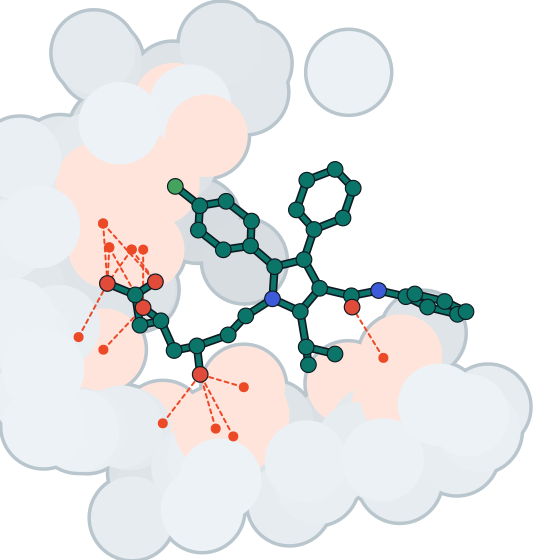
14 polar contacts with 9 residues, each within 3.5 Å
Blocks a liver enzyme involved in making cholesterol, which lowers “bad” LDL cholesterol and slightly raises “good” HDL cholesterol in the blood.
How it works
Atorvastatin blocks an enzyme the liver uses early in the process of building cholesterol, so the liver makes less of it. To make up for the drop, liver cells put more cholesterol-catching receptors on their surface, which pulls extra “bad” LDL cholesterol out of the blood and clears it away. At the same time, the liver releases less LDL into circulation in the first place. Together, this lowers LDL and triglyceride levels in the blood while giving a small boost to “good” HDL cholesterol.
What it’s used for
Doctors prescribe atorvastatin to lower the risk of heart attack and stroke in adults who have risk factors for heart disease, existing heart disease, or type 2 diabetes. It's also used, along with diet changes, to bring down high cholesterol and triglyceride levels — including in some inherited high-cholesterol conditions — and to raise “good” HDL cholesterol, in both adults and some children ages 10 and up.
- Mechanism
- HMG-CoA reductase inhibitor
- Drug class
- Small molecule
- Therapeutic area
- Cardiovascular / Lipid
- Structure shown
- X-ray, 2001