Simvastatin
Zocor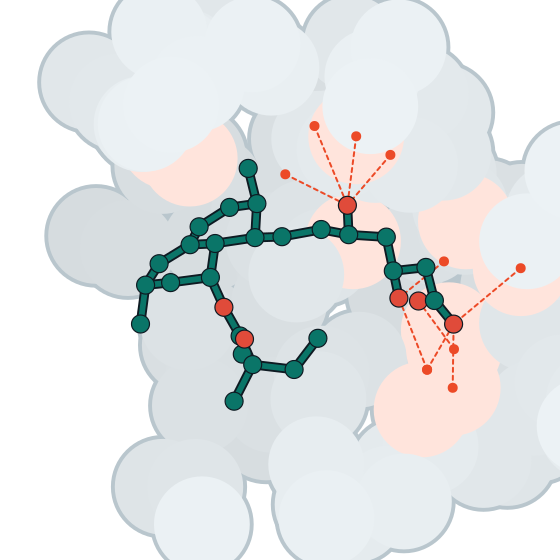
10 polar contacts with 8 residues, each within 3.5 Å
Shown: simvastatin acid, the active form the body makes from simvastatin.
Blocks a liver enzyme your body uses to make cholesterol, prompting the liver to pull more “bad” cholesterol out of your bloodstream.
How it works
Simvastatin is inactive until your body converts it into its working form. That active form shuts down an enzyme in the liver that's needed to build cholesterol. With less cholesterol being made, liver cells respond by grabbing more LDL cholesterol out of the blood to use as a substitute. Over time this lowers both LDL and total cholesterol, as well as another fat-carrying particle called VLDL. It usually takes about a month of regular use to see the full cholesterol-lowering effect.
What it’s used for
Used to lower the chances of heart attack, stroke, heart-related death, or needing a procedure to reopen blocked arteries in adults already at high risk. Also prescribed, alongside a healthy diet, to lower high LDL cholesterol in adults and in children age 10 and up who have an inherited form of high cholesterol.
- Mechanism
- HMG-CoA reductase inhibitor
- Drug class
- Small molecule
- Therapeutic area
- Cardiovascular
- Structure shown
- X-ray, 2001