Ezetimibe
Zetia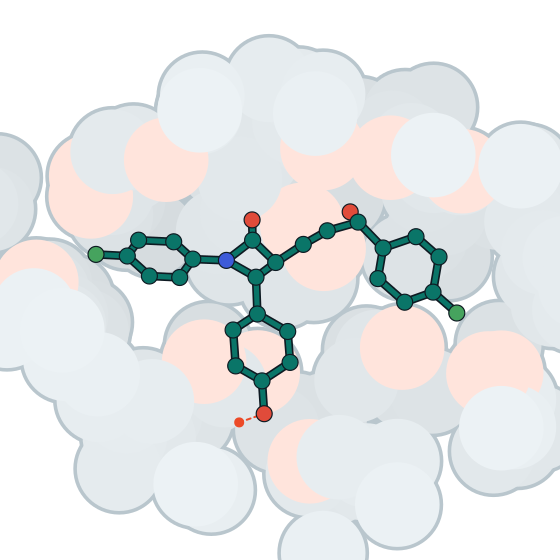
1 polar contact with 1 residue, each within 3.5 Å
Blocks a gut transporter called NPC1L1 that normally lets cholesterol from food and bile get absorbed, so less cholesterol reaches the liver and the liver pulls more 'bad' LDL cholesterol out of the blood to compensate.
How it works
Ezetimibe works in the gut, not the liver. It blocks a transporter called NPC1L1 that normally lets cholesterol from food, and from bile, get absorbed through the intestinal wall. With less cholesterol getting in, less reaches the liver, so the liver puts more cholesterol-catching receptors on its surface to compensate, pulling more bad LDL cholesterol out of the bloodstream. This is a different strategy than statins, also on this site, which block the liver from manufacturing its own cholesterol in the first place, which is why ezetimibe is often added on top of a statin for extra LDL-lowering.
What it’s used for
Ezetimibe is prescribed, often alongside a statin, to lower LDL (bad) cholesterol in adults and some children with high cholesterol, including inherited forms like familial hypercholesterolemia. It's also combined with the drug fenofibrate for people with mixed high cholesterol and triglycerides, and it has a narrower use in a rare inherited condition called sitosterolemia, where the body absorbs too many plant-derived fats from food.
- Mechanism
- NPC1L1 (sterol transporter) inhibitor
- Drug class
- Small molecule
- Therapeutic area
- Cardiovascular / Lipid
- Structure shown
- Cryo-EM, 2021