Amlodipine
Norvasc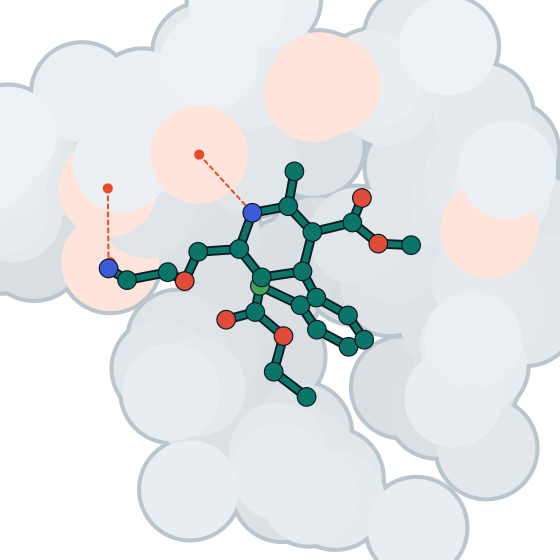
3 polar contacts with 2 residues, each within 3.5 Å
Relaxes and widens blood vessels by blocking calcium from entering their muscle cells, easing the heart's workload and lowering blood pressure.
How it works
Amlodipine blocks tiny channels that let calcium into the muscle cells lining blood vessels and the heart. It affects blood vessel muscle more strongly than heart muscle, so its main effect is to relax and widen arteries, which lowers the resistance the heart has to pump against and brings blood pressure down. It binds and releases from these channels slowly, so its effect builds up gradually and lasts evenly all day, which is why it only needs to be taken once daily. It also widens the arteries that feed the heart itself, which eases chest pain whether it's brought on by physical activity or by sudden artery spasms.
What it’s used for
Used to treat high blood pressure and lower the risk of stroke and heart attack. Also used to relieve angina (chest pain) — both the kind triggered by physical exertion and the kind caused by sudden artery spasms — and prescribed for people with confirmed coronary artery disease to reduce their chances of needing hospital treatment for chest pain or a heart procedure.
- Mechanism
- L-type calcium channel blocker
- Drug class
- Small molecule
- Therapeutic area
- Cardiovascular
- Structure shown
- Cryo-EM, 2023