Ixekizumab
Taltz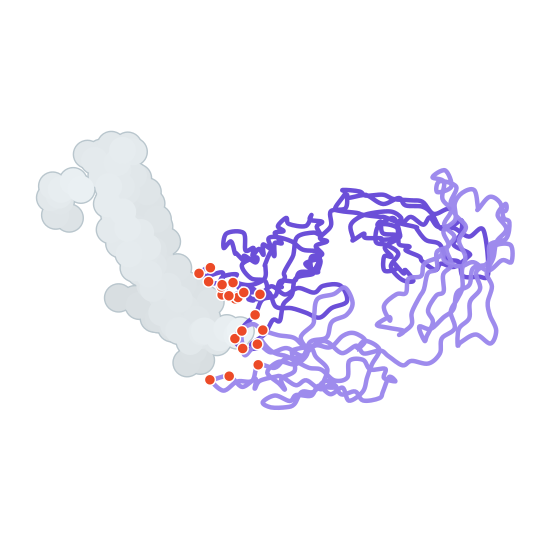
21 antibody residues touch IL-17A, each within 4 Å
Shown: the antibody's Fab, its antigen-binding arm, not the whole antibody.
A lab-made antibody that latches onto IL-17A, a signaling protein that drives inflammation, preventing it from triggering the runaway immune response seen in psoriasis and related joint diseases.
How it works
Ixekizumab works by finding and binding to a specific inflammation-signaling molecule before it can do damage. Normally, this signal tells skin and joint cells to ramp up inflammation and grow too quickly, causing the thick, scaly patches in psoriasis and the pain and swelling in inflammatory arthritis. By blocking this one signal, the drug calms that overactive process at its source rather than suppressing the whole immune system.
What it’s used for
Used to treat moderate-to-severe plaque psoriasis in adults and children 6 and up, as well as several types of inflammatory arthritis affecting the joints and spine.
- Mechanism
- IL-17A antagonist (mAb)
- Drug class
- Monoclonal antibody
- Therapeutic area
- Dermatology / Immunology
- Structure shown
- X-ray, 2025