Erenumab
Aimovig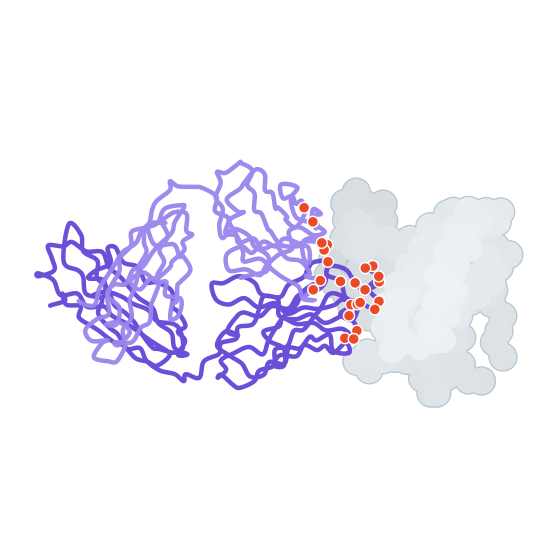
24 antibody residues touch CGRP receptor, each within 4 Å
Shown: the antibody's Fab, its antigen-binding arm, not the whole antibody.
A lab-made antibody that attaches to the CGRP receptor on nerve cells — the docking site for a molecule that triggers migraine pain — and blocks it from being activated.
How it works
During a migraine, a protein called CGRP surges and binds to receptors on nerve cells, helping set off the pain and other symptoms. Erenumab is an antibody designed to get to that receptor first and sit on it, so CGRP can't dock and send its start-a-migraine signal. Because it's an antibody rather than a small chemical, it lingers in the body for weeks, which is why it's injected only once a month.
What it’s used for
Used to help prevent migraines before they start, for adults who get them regularly. It's a monthly self-injection, not a treatment for a migraine that's already happening.
- Mechanism
- CGRP receptor antagonist (mAb)
- Drug class
- Monoclonal antibody
- Therapeutic area
- Neurology
- Structure shown
- X-ray, 2020