Donepezil
Aricept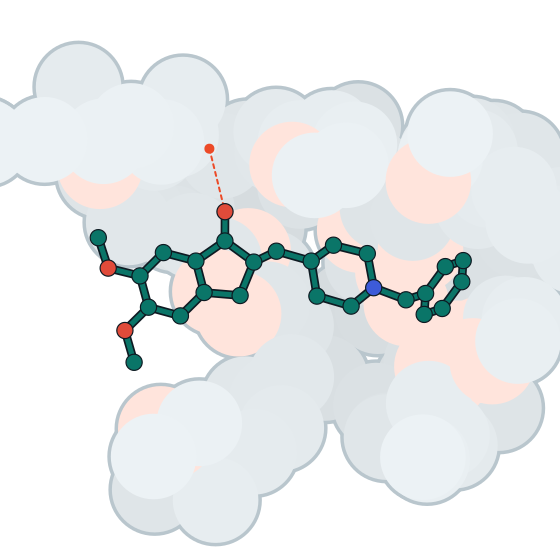
1 polar contact with 1 residue, each within 3.5 Å
Blocks the enzyme that normally clears away a brain chemical used for memory and thinking, so more of it lingers between nerve cells — easing Alzheimer's symptoms without touching the underlying disease process the way newer antibody drugs like lecanemab aim to.
How it works
Alzheimer's disease damages the brain cells that make a chemical messenger called acetylcholine, which nerve cells use to communicate for memory and thinking. Donepezil works by blocking the enzyme that normally clears acetylcholine away, so more of it lingers between nerve cells. This can ease symptoms for a while, but it doesn't fix the underlying damage causing the disease — that's different from newer antibody drugs like lecanemab, also on this site, which try to physically clear out the sticky amyloid plaques thought to drive the disease itself.
What it’s used for
Donepezil is used to help with memory and thinking problems in people with Alzheimer's disease, at any stage of the illness. It treats symptoms, not the root cause.
- Mechanism
- Acetylcholinesterase inhibitor (reversible)
- Drug class
- Small molecule
- Therapeutic area
- Neurology
- Structure shown
- X-ray, 2012