Buspirone
Buspar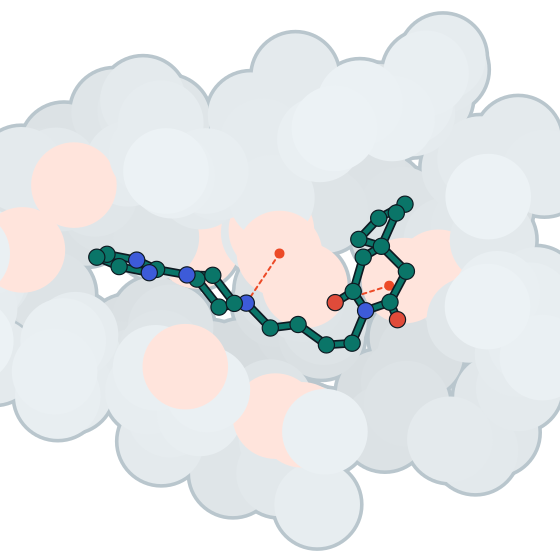
2 polar contacts with 2 residues, each within 3.5 Å
Calms anxiety by partially activating a serotonin receptor rather than boosting GABA the way benzodiazepines like diazepam and alprazolam do — slower to take effect, but without their sedation or dependence risk.
How it works
Buspirone works on a completely different brain target than benzodiazepines like diazepam and alprazolam, also on this site. Instead of boosting the calming chemical GABA, it partially activates a serotonin receptor called 5-HT1A, with some weaker action on dopamine receptors too. Because it doesn't touch the GABA system at all, it doesn't cause the drowsiness or the risk of dependence and withdrawal that come with benzodiazepines. The tradeoff is timing: it needs to be taken regularly for one to several weeks before its anti-anxiety effect kicks in, so it can't be used for quick, as-needed relief the way a benzodiazepine can.
What it’s used for
Buspirone is used to manage ongoing anxiety disorders and relieve anxiety symptoms, primarily generalized anxiety disorder. It is not approved for panic disorder the way some benzodiazepines, like alprazolam, are, and it isn't meant for everyday stress that doesn't rise to a diagnosable anxiety disorder.
- Mechanism
- Serotonin 5-HT1A receptor partial agonist (non-benzodiazepine anxiolytic)
- Drug class
- Small molecule
- Therapeutic area
- CNS / Anxiety
- Structure shown
- Cryo-EM, 2025