Alprazolam
Xanax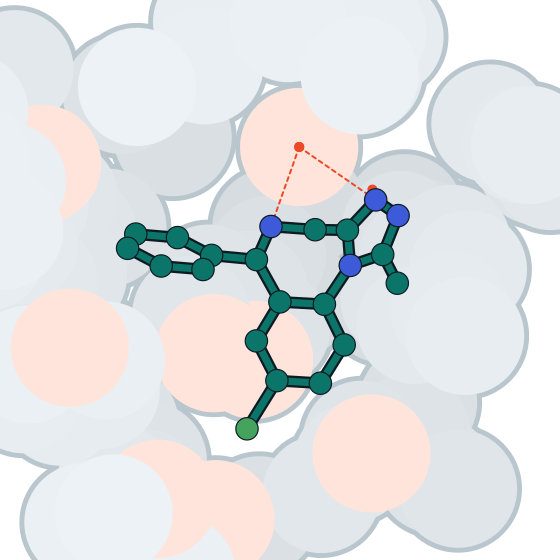
3 polar contacts with 2 residues, each within 3.5 Å
Boosts the effect of GABA, a natural brain chemical that puts the brakes on overactive nerve signals, turning up those brakes to quiet the racing thoughts and physical tension of anxiety and panic.
How it works
Alprazolam works by boosting the effect of GABA, a chemical messenger in your brain that naturally puts the brakes on overactive nerve activity. By making those brakes work harder, it quiets the racing thoughts and physical tension that come with anxiety and panic — which is also why it can make you drowsy and why your body can become dependent on it with regular use.
What it’s used for
Alprazolam is prescribed for the short-term treatment of generalized anxiety disorder and for panic disorder, with or without a fear of open or crowded spaces. It carries a boxed warning — the FDA's strongest safety warning — for three reasons: taking it together with opioid painkillers can cause dangerously slowed breathing and even death; like other benzodiazepines, it carries a real risk of abuse and addiction; and stopping it suddenly after regular use can trigger severe, potentially life-threatening withdrawal, so any dose reduction needs to happen gradually under a doctor's guidance.
- Mechanism
- Benzodiazepine, GABA-A receptor positive allosteric modulator
- Drug class
- Small molecule
- Therapeutic area
- CNS / Anxiety
- Structure shown
- Cryo-EM, 2019