Atezolizumab
Tecentriq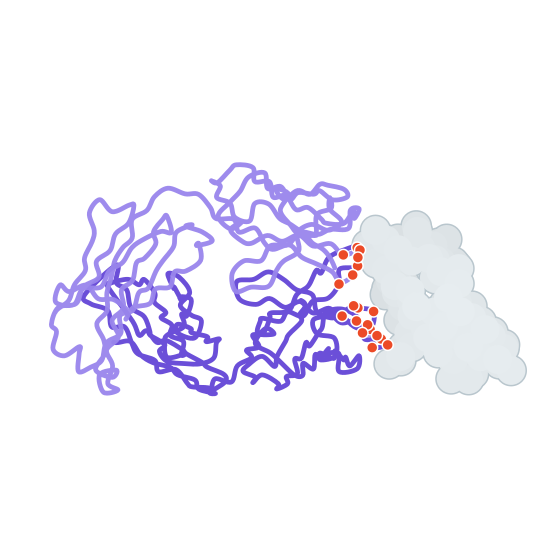
19 antibody residues touch PD-L1, each within 4 Å
Shown: the antibody's Fab, its antigen-binding arm, not the whole antibody.
A lab-made antibody that sticks to PD-L1, a cloaking protein tumors use to hide from the immune system, so your T cells can recognize and attack the cancer.
How it works
Cancer cells often display a protein called PD-L1 on their surface, which acts like a don't-attack-me signal to the immune system's T cells. Atezolizumab is an antibody designed to grab onto PD-L1 and block that signal. With the signal blocked, T cells are no longer held back and can recognize and attack the cancer. The drug doesn't kill cancer cells directly, it works by unleashing the body's own immune defenses against them.
What it’s used for
Used to treat several types of cancer, most notably lung cancer, liver cancer, an advanced form of skin cancer, a rare soft-tissue sarcoma, and bladder cancer after surgery to remove the bladder. It's often given together with chemotherapy or other cancer drugs rather than alone.
- Mechanism
- PD-L1 checkpoint inhibitor (mAb)
- Drug class
- Monoclonal antibody
- Therapeutic area
- Immuno-oncology
- Structure shown
- X-ray, 2017