Tirzepatide
Mounjaro / Zepbound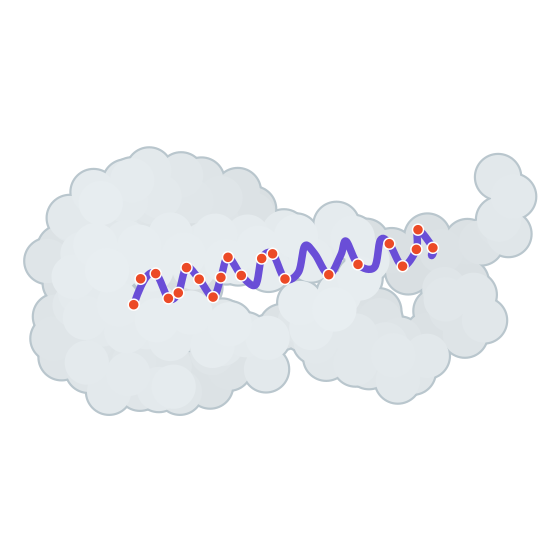
21 tirzepatide residues touch GLP-1 receptor, each within 4 Å
Tirzepatide acts on two receptors, GLP-1 and GIP; shown is the GLP-1 receptor (the GIP receptor structure, 7RBT, is slightly less sharp). Its fatty-acid chain is not resolved.
A lab-made hormone that boosts insulin release and appetite control through two gut-hormone pathways at once.
How it works
Tirzepatide copies two hormones your gut normally makes after eating, called GIP and GLP-1, and turns on both of their signals at the same time. This tells the pancreas to release more insulin and less of the sugar-raising hormone glucagon, mainly when blood sugar is already high. It also slows down digestion and quiets hunger signals in the brain, so people tend to feel full sooner and eat less.
What it’s used for
As Mounjaro, this drug helps adults and children 10 and older with type 2 diabetes manage their blood sugar, alongside diet and exercise. As Zepbound, the same medicine is approved to help adults with obesity, or who are overweight with a related health condition, lose weight and keep it off, and to treat moderate-to-severe obstructive sleep apnea in adults with obesity — both always alongside diet and exercise changes.
- Mechanism
- GLP-1 / GIP dual receptor agonist (peptide analog)
- Drug class
- Peptide analog
- Therapeutic area
- Metabolic / Diabetes / Weight Management
- Structure shown
- Cryo-EM, 2022