Sildenafil
Viagra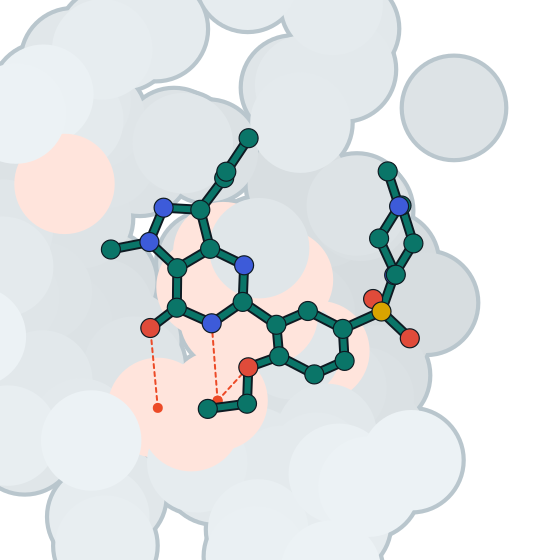
3 polar contacts with 1 residue, each within 3.5 Å
Relaxes blood vessels in specific tissues, boosting blood flow where the body's natural chemical signal for it is already active.
How it works
When a man is sexually aroused, the body releases a signaling chemical that tells blood vessels in the penis to relax and fill with blood. Sildenafil doesn't create that signal itself, it blocks the enzyme that normally shuts the signal off, so the effect lasts longer and blood flow increases more than it would on its own. That's why sexual stimulation is still needed for the medicine to work. The same blood-vessel-relaxing action, when it happens in the lungs instead, is used to treat a different condition — high blood pressure in the lung's arteries.
What it’s used for
As Viagra, helps men with erectile dysfunction achieve and maintain erections during sexual activity. The same active drug, sold as Revatio, is used to treat a serious lung condition where blood pressure in the lungs' arteries is too high — it is not meant to be taken alongside Viagra since they contain the same medicine.
- Mechanism
- Phosphodiesterase-5 (PDE5) inhibitor
- Drug class
- Small molecule
- Therapeutic area
- Vascular
- Structure shown
- X-ray, 2004
The heart drug that failed at its job and succeeded at another
Viagra started out as a failed heart drug. Pfizer was testing it for chest pain and high blood pressure, but it didn't work especially well for that — what it did do, unexpectedly, was cause erections in some of the male trial participants, a side effect researchers noticed and decided to pursue on its own. Repurposed and approved in 1998, it became the first pill ever approved for erectile dysfunction, replacing injections and implants as the standard treatment, and it launched an entire class of drugs, called PDE5 inhibitors, that includes tadalafil, also on this site.
Pivotal trial
A randomized, placebo-controlled dose-response trial in men with erectile dysfunction of broad-spectrum etiology, conducted 1996-1997, before clinical trial registries existed, so no NCT number applies.