Levonorgestrel
Plan B One-Step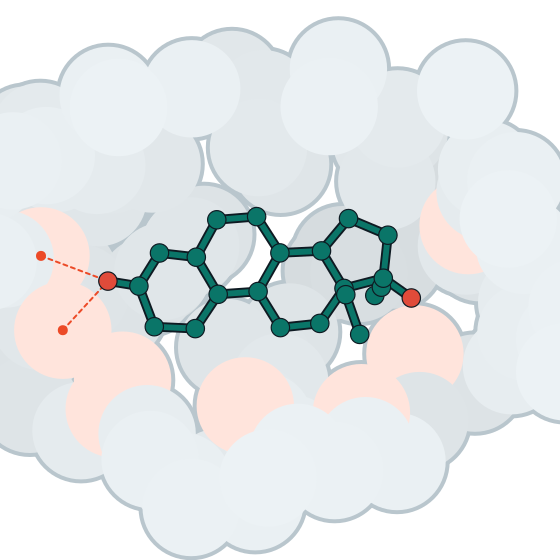
2 polar contacts with 2 residues, each within 3.5 Å
Temporarily delays the release of an egg from the ovary, so there's no egg around for sperm to fertilize.
How it works
Levonorgestrel is a lab-made version of the hormone progesterone. Taken soon after unprotected sex, it tells the body to hold off on releasing an egg that cycle, pushing ovulation back by several days — long enough for sperm to die off before an egg shows up. It doesn't work by blocking a fertilized egg from implanting, and it won't end a pregnancy that's already happened — it only works before an egg is released. That's also why it's less effective the closer you are to ovulation, and doesn't work at all once ovulation has occurred.
What it’s used for
Used as backup birth control after unprotected sex or a contraceptive mishap, to lower the odds of getting pregnant. It's not meant to replace regular birth control, and it won't end a pregnancy that's already occurred.
- Mechanism
- Synthetic progestin — progesterone receptor agonist
- Drug class
- Small molecule
- Therapeutic area
- Reproductive health / Contraception
- Structure shown
- X-ray, 2009