Estradiol
Estrace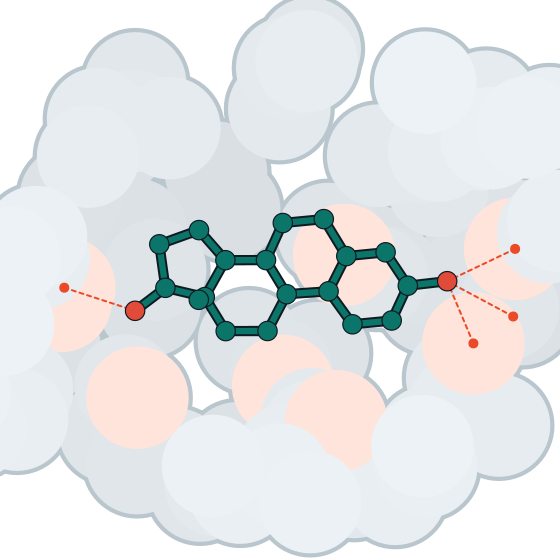
4 polar contacts with 3 residues, each within 3.5 Å
Docks onto estrogen receptors throughout the body, replacing the hormone the ovaries stop making enough of after menopause or ovarian failure.
How it works
Estradiol is the main form of estrogen the body makes naturally. It works by docking onto estrogen receptors inside cells throughout the body — in reproductive tissue, bone, the heart and blood vessels, and the brain — switching on genes that keep those tissues working the way they do before menopause. When the body's own estrogen production drops, whether from menopause, ovarian failure, or surgery, estradiol tablets replace what's missing.
What it’s used for
Used to relieve hot flashes and vaginal dryness during menopause, to replace estrogen in women whose ovaries don't produce enough of it, as a palliative treatment for certain advanced breast and prostate cancers, and to help prevent bone loss after menopause.
- Mechanism
- Estrogen receptor agonist (hormone replacement)
- Drug class
- Small molecule
- Therapeutic area
- Endocrine
- Structure shown
- X-ray, 2002