Dupilumab
Dupixent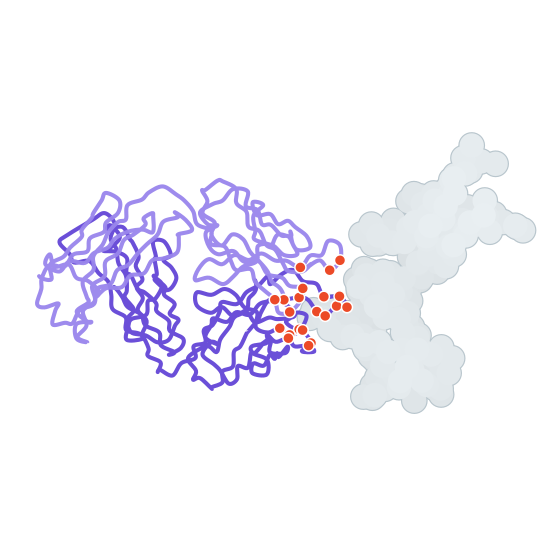
22 antibody residues touch IL-4 receptor α, each within 4 Å
Shown: the antibody's Fab, its antigen-binding arm, not the whole antibody.
A lab-made antibody that blocks a receptor called IL-4Rα, shutting down two inflammation-signaling proteins that drive itching, swelling, and tissue damage in allergic and inflammatory diseases.
How it works
Your immune system uses two signaling proteins to ramp up inflammation in allergic conditions. Dupilumab works like a roadblock, sitting on the receptor these two proteins need to dock onto, so neither one can deliver its turn-on-inflammation message. Because it targets one specific receptor rather than the whole immune system, it calms the specific overactive response driving conditions like eczema or asthma while leaving broader immune defenses more intact.
What it’s used for
Approved to treat a wide range of conditions where the immune system overreacts and causes inflammation, including eczema, certain types of asthma, chronic sinus inflammation with nasal polyps, an allergic swallowing disorder, intensely itchy skin bumps, chronic hives, a blistering skin condition, and a subtype of COPD.
- Mechanism
- IL-4Rα antagonist (mAb)
- Drug class
- Monoclonal antibody
- Therapeutic area
- Immunology / Dermatology
- Structure shown
- X-ray, 2020