Amphetamine
Adderall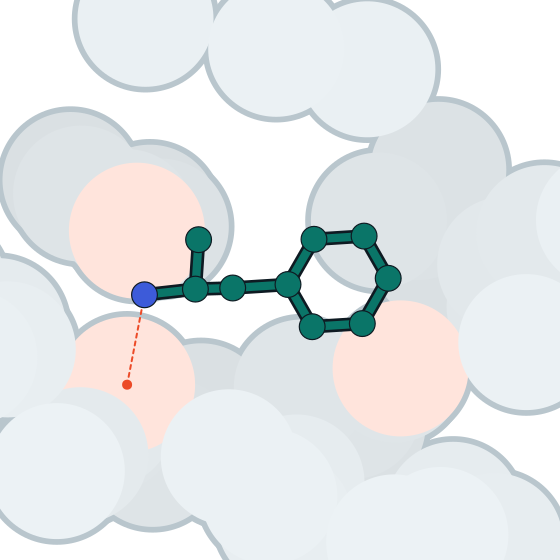
1 polar contact with 1 residue, each within 3.5 Å
Gets pulled into nerve cells by the same transporters it will later reverse, then breaks open the internal storage packets holding dopamine and norepinephrine and pumps both out into the synapse in a flood — a more forceful release mechanism than methylphenidate's simple reuptake blockade, even though both treat ADHD.
How it works
Unlike Concerta (methylphenidate), also on this site, which works by plugging up the 'drains' that normally clear dopamine and norepinephrine away, Adderall works from the inside: it hitches a ride into the nerve cell on those same drains, breaks open the internal storage packets holding dopamine and norepinephrine, and then runs the drains themselves backward, actively pumping those chemicals out into the space between nerve cells. The result is a much bigger flood of these focus-and-alertness chemicals than simply blocking reuptake would produce — a genuinely different mechanism from methylphenidate, even though both drugs are prescribed for ADHD.
What it’s used for
Adderall is prescribed to treat ADHD and narcolepsy, a condition involving excessive daytime sleepiness with sudden sleep attacks. It carries a boxed warning, the FDA's strongest safety warning, because it's a Schedule II controlled substance with real potential for abuse and addiction.
- Mechanism
- CNS stimulant, triggers non-vesicular dopamine/norepinephrine release via VMAT2 displacement and transporter reversal
- Drug class
- Small molecule
- Therapeutic area
- CNS / Psychiatric
- Structure shown
- Cryo-EM, 2026